What Is My Barndominium Worth?
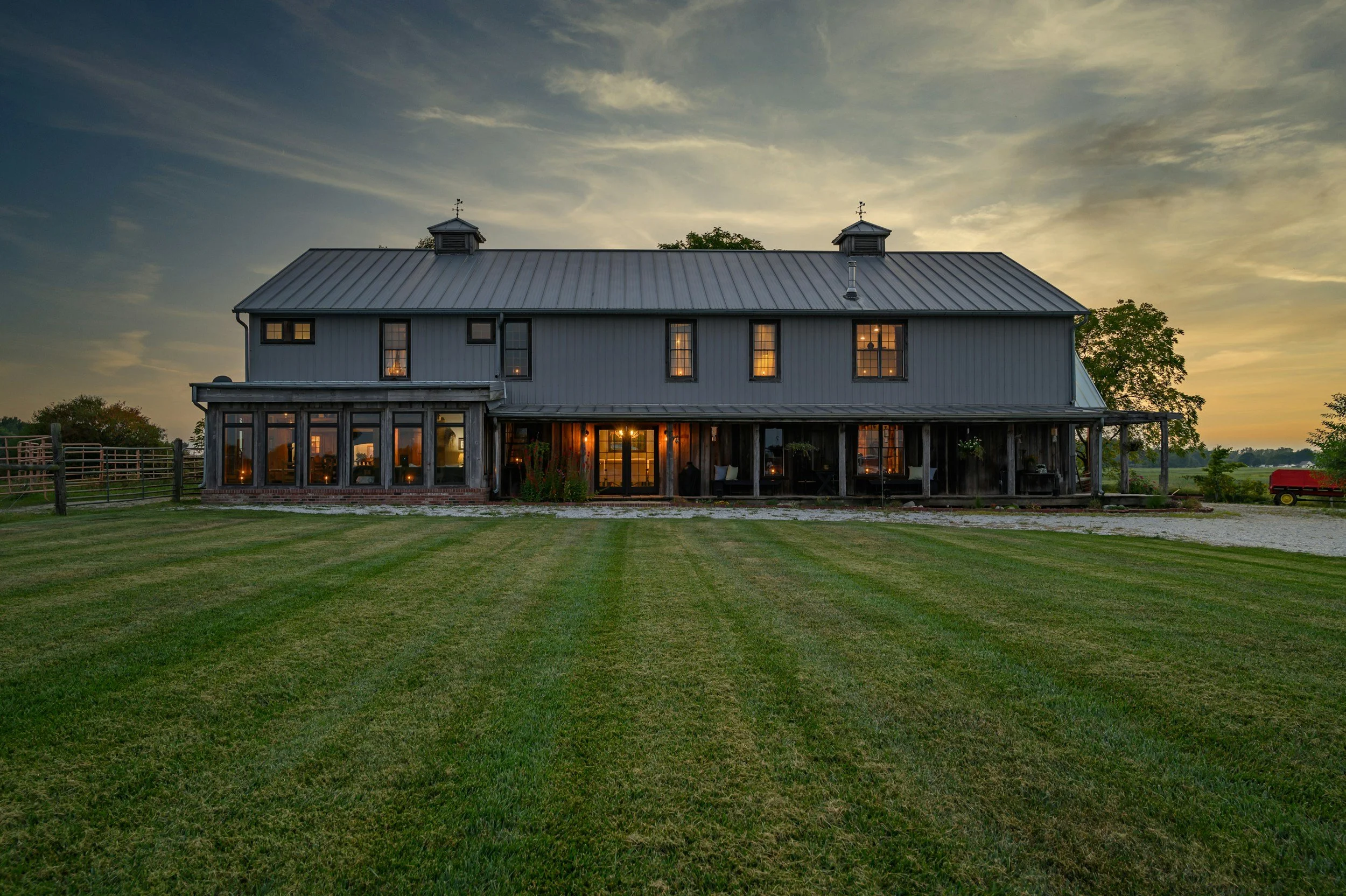
Barndominiums have gone from a novelty to a normal sight around the Tulsa metro, especially on acreage outside Owasso, Collinsville, Bixby, and Jenks. They are also one of the harder property types to put an accurate value on, which is why owners tend to get wildly different answers depending on who they ask.
The short answer to what yours is worth: it is set by what comparable finished living space has actually sold for in your area, adjusted for your land, your finish level, and how much of the building is heated and cooled living area versus shop. The county's number is often wrong, and an online estimate is usually worse. A proper home appraisal is the only way to get a figure that stands up to a lender, a buyer, or an assessor.
Here is what actually goes into it.
Why barndominiums are harder to appraise than a standard house
Three things make the job different from valuing a house in a subdivision.
First, there are far fewer sales to work from. In a typical neighborhood, an appraiser can find several closed sales within a mile in the last six months. For a barndominium, there might be a handful in the entire county over the last two years. That means searching a wider area and a longer time window, then adjusting carefully for the differences that come with it.
Second, every one is different. Two barndominiums of the same total square footage can be nothing alike. One is 3,200 square feet with 1,400 finished as a home and the rest open shop. The other is 3,200 square feet finished wall to wall with hardwood and a designer kitchen. Those are not the same property and they are not close in value.
Third, the land carries a bigger share of the value. Most barndominiums sit on acreage, and out here that acreage can be a meaningful part of the total. Getting the land right matters as much as getting the structure right.
None of this makes the value unknowable. It just means the analysis has to be built for the property instead of pulled off a template.
What counts as living area, and what does not
This is the single biggest thing owners get wrong, and it is where most of the disagreement comes from.
Appraisers measure finished living area to the ANSI standard, and that standard only counts space that is finished, heated, and cooled, and accessible from within the living area. Open shop bays, unfinished storage, an unconditioned garage, and a covered porch do not count as living area. They still have value, and a good appraisal gives them value, but as a separate line item rather than as part of the square footage figure.
So a 4,000 square foot building with 1,800 square feet of finished living space is a 1,800 square foot home with a large outbuilding attached. Comparing it to a 4,000 square foot house is how people end up with a number that has no chance of appraising.
We measure every property ourselves rather than trusting county records, which is why square footage measurement is a standalone service here. On barndominiums that measurement is not a formality. It usually changes the answer.
Where the comparable sales come from
For a standard home we look for recent sales close by that genuinely compete for the same buyer. For a barndominium, the search has to widen in a controlled way.
We generally start with other barndominiums and post-frame homes in the surrounding counties, then widen to comparable rural and acreage homes with substantial outbuildings, since that is who the same buyer is actually shopping against. Older sales can be used when the market data supports a time adjustment, and every stretch we make gets documented in the report so anyone reading it can see exactly why a particular sale was used.
What we do not do is grab three sales in town and call it close enough. That is how a barndominium ends up either badly undervalued or over-appraised into a financing problem.
The finish level is the biggest swing
Between two barndominiums on similar land with similar living area, the finish level is where the value separates. The things that move it most:
Interior finish quality. Drywall, trim, cabinetry, countertops, and flooring, versus exposed framing and utility-grade materials.
Kitchen and bathroom count and quality. Same as any home, and just as decisive.
Insulation and climate control. Whether the shop portion is insulated and conditioned changes both its usability and how a buyer values it.
Utilities and site work. Well versus rural water, septic system and condition, electrical service size, and whether the drive is paved or gravel.
Foundation and construction type. Post-frame versus a conventional slab-on-grade build affects both value and, in some cases, what financing is available.
Owners often assume the build cost sets the value. On a custom barndominium, especially an owner-built one, what you spent and what a buyer will pay can be very different numbers, in both directions.
When the cost approach carries more weight
Appraisers have three approaches to value: sales comparison, cost, and income. On a normal house, sales comparison does almost all the work and the cost approach is a sanity check. We walk through all three in more detail in how appraisers determine home value.
On a newer barndominium with genuinely thin comparable data, the cost approach earns more weight than it usually gets. We estimate the land value from local land sales, estimate what it would cost to rebuild the structure today, subtract for depreciation, and use that as a real check on the sales comparison result. When the two approaches point at the same range, confidence goes up. When they do not, that gap is worth explaining in the report rather than papering over.
What to have ready before the appraisal
You can make this faster and more accurate with about fifteen minutes of prep.
Build documents. Plans, the builder's spec sheet, and the total finished square footage if you have it. Owner-builders often have the best records of anyone.
Your own read on finished versus unfinished space. If you know the split, tell us. We will verify it either way.
Land details. Acreage, survey if you have one, water source, septic type and age, and electrical service.
Improvement history. What was finished when, and by whom.
Anything unpermitted. Tell us. It is far better handled openly in the report than discovered by a buyer's appraiser later.
If you are thinking about selling, this is also a strong case for a pre-listing appraisal. Barndominiums are the property type where sellers most often price off the wrong assumption, and where an agent's estimate has the least data behind it.
Frequently asked questions
Does my shop space add to the appraised value?
Yes, but not as living area. Unfinished, unconditioned shop and storage space is valued separately as an improvement, not added to the finished square footage. It typically contributes meaningfully less per square foot than finished living space, and how much depends on its condition, insulation, and usability.
Why is the county's square footage different from my appraiser's?
County assessment records are built for taxation and often come from permits, sketches, or older data rather than a physical measurement. On barndominiums the finished and unfinished portions frequently get lumped together. We measure the property in person to the ANSI standard, so our figure is usually the more accurate one.
Can I get a barndominium appraised for a loan?
An appraisal can be done on any property. Whether a specific lender will finance it is a separate question, and it depends on the lender, the loan program, and how the property is classified. Talk to your lender about their requirements before you order anything, and tell us what program you are working with so we know what the report needs to address.
Is a barndominium worth less than a comparable traditional house?
Not automatically. Well-finished barndominiums on good acreage sell strongly in this market. The value gap most people notice comes from comparing total building square footage to a house's finished square footage, which is not a fair comparison. Compare finished living area to finished living area and the picture usually looks different.
How long does a barndominium appraisal take?
The inspection runs longer than a standard home because there is more to measure and document, and the research takes longer because the comparable sales are spread out. Plan on a longer turnaround than a subdivision house. We will give you a realistic timeline when you call.
Get a real number on your barndominium
We appraise acreage and non-standard properties across the Tulsa metro and out into the surrounding counties, and barndominiums are a property type we actively want, not one we try to talk around. If you are refinancing, selling, settling an estate, or you just want to know where you stand, we will measure it properly and show our work.
Call (918) 417-1581 or tell us about the property. Mention that it is a barndominium when you reach out so we can plan the right amount of time for the inspection.